
Choosing the right fire extinguisher depends entirely on the class of fire you are dealing with. Using the wrong type doesn’t just fail to put the fire out — it can make the situation significantly worse.
There are five primary types of extinguisher used to combat fires involving solids, liquids, gases, cooking oils, or electrical equipment.
- Water extinguishers (bright red label)
Standard tools for Class A fires involving organic materials like wood, paper, textiles, and cardboard. They work by cooling the fire and removing heat. They must never be used on electrical equipment or flammable liquids — water conducts electricity and can spread liquid fires.
- Foam extinguishers (cream label)
Designed primarily for Class B fires involving flammable liquids like petrol, diesel, and oils. Foam creates a physical blanket over the flames, smothering the fire and cutting off oxygen. They can also be used on Class A solids.
- Dry powder extinguishers (blue label)
Often called ABC extinguishers, these combat Class A, B, and C fires (flammable gases like methane or propane). They work by chemically interrupting the fire triangle. Effective, but the powder creates a dense cloud that obscures vision and can damage delicate electronics.
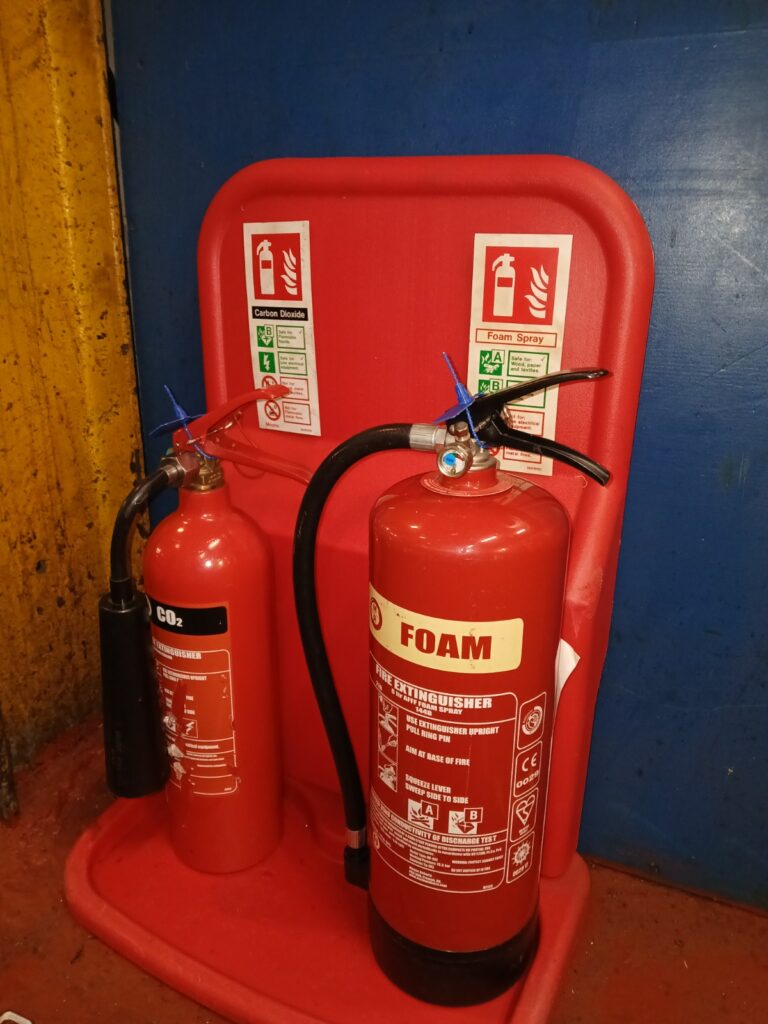
- Carbon dioxide (CO2) extinguishers (black label)
The correct choice for electrical fire hazards — essential for modern offices and server rooms. CO2 is a clean gas that leaves no residue and smothers fire by displacing oxygen. Also suitable for Class B liquid fires.
- Wet chemical extinguishers (yellow label)
Engineered specifically for Class F fires involving high-temperature cooking oils and deep fat fryers in commercial kitchens. They deploy a chemical formulation that cools the oil and forms a thick, soapy layer sealing the surface.
- Monthly visual checks
Property owners should inspect monthly: extinguisher accessible, pressure gauge in the green zone, safety pin intact, no visible rust or damage.
- Annual professional servicing
UK safety standards require annual inspection by a qualified technician. For commercial properties in the West Midlands, partnering with a specialist for fire safety services in Birmingham ensures units are weight-tested, internally checked, and legally compliant.
- Extended five-year service
Every five years, most extinguishers require a discharge test — the unit is emptied, checked internally for corrosion, refilled, and repressurised. Arranging a routine fire extinguisher service in Birmingham ensures this maintenance cycle is completed without disrupting operations.
Spectra Fire and Security provide extinguisher servicing and fire safety services across Birmingham and the surrounding area. Get in touch to arrange a service visit.